Aluminium composite panels are among the most widely used facade cladding materials. They are light, flat, easy to fabricate and available in almost any colour. Yet when clients choose a panel, the discussion often centres on colour and cost, while the most important property sits in the background: how the panel behaves in a fire.
This article explains the different core types, what the fire classifications mean and what to check before you specify.
Why the core matters
An aluminium composite panel is made of two thin aluminium skins bonded to a core. The skins give the panel its finish and stiffness. Its fire performance is determined largely by the core.
Two panels with different cores can look identical from the outside. That is why selection must be based on the documented fire classification of the product, not on a colour sample. The Grenfell Tower fire in London in 2017 showed the whole industry, in the most tragic way, how combustible-core panels can spread fire across a facade.
How to read a fire classification
In Europe, and in Türkiye, the reaction to fire of construction products is classified under EN 13501-1. The main classes run from A1 to F:
- A1 and A2: non-combustible or limited combustibility.
- B, C and D: combustible materials with increasing contribution to fire.
- E and F: very low performance, or performance not determined.
Two additional indicators sit alongside the main class:
- s (smoke): smoke production, from s1 (least) to s3 (most).
- d (droplets): flaming droplets or particles, from d0 (none) to d2 (most).
So “A2-s1,d0” describes a material of limited combustibility that produces little smoke and no flaming droplets.
PE, FR and A2 cores compared
PE core
A PE core is made of polyethylene, which is combustible. In a fire it melts, can drip and can help flame travel up the facade. These panels achieve only low classifications. Many countries now ban or heavily restrict PE-core panels on building facades, particularly on tall and high-occupancy buildings.
FR core
An FR (fire-retardant) core is a polymer binder with a high proportion of mineral filler, which significantly reduces combustibility. FR-core panels are typically classified B-s1,d0. They still contain some combustible material, which matters when the regulations call for limited combustibility.
A2 core
An A2 core has an even higher mineral content, with the organic content kept to a minimum. These panels are classified A2-s1,d0, meaning limited combustibility. On tall buildings, hospitals and other high-occupancy buildings where fire safety is most critical, A2 composite panels are increasingly the norm.
The panel class is not the whole story
A facade’s fire performance depends on the full build-up, not the panel alone:
- Insulation: the fire classification of the insulation behind the panel.
- Cavity and cavity barriers: in ventilated facades, interrupting the cavity at floor lines limits the chimney effect.
- Substructure: the suitability of the aluminium or steel support system and its fixings.
- Window and door openings: the details around openings are critical points where fire can reach the facade.
Always ask for the supporting documents, such as the classification report and the declaration of performance, and check that the panels delivered to site match the product in those documents.
Who decides which panel is required?
In Türkiye, the fire performance required of facade materials is set by the Regulation on the Protection of Buildings from Fire (Binaların Yangından Korunması Hakkında Yönetmelik). The required class depends on factors such as building height, use and facade type. Other countries apply their own building and fire codes. The project-specific decision rests with the project’s fire engineer and design team. As the facade contractor, our role is to supply and install products and details that meet those requirements correctly.
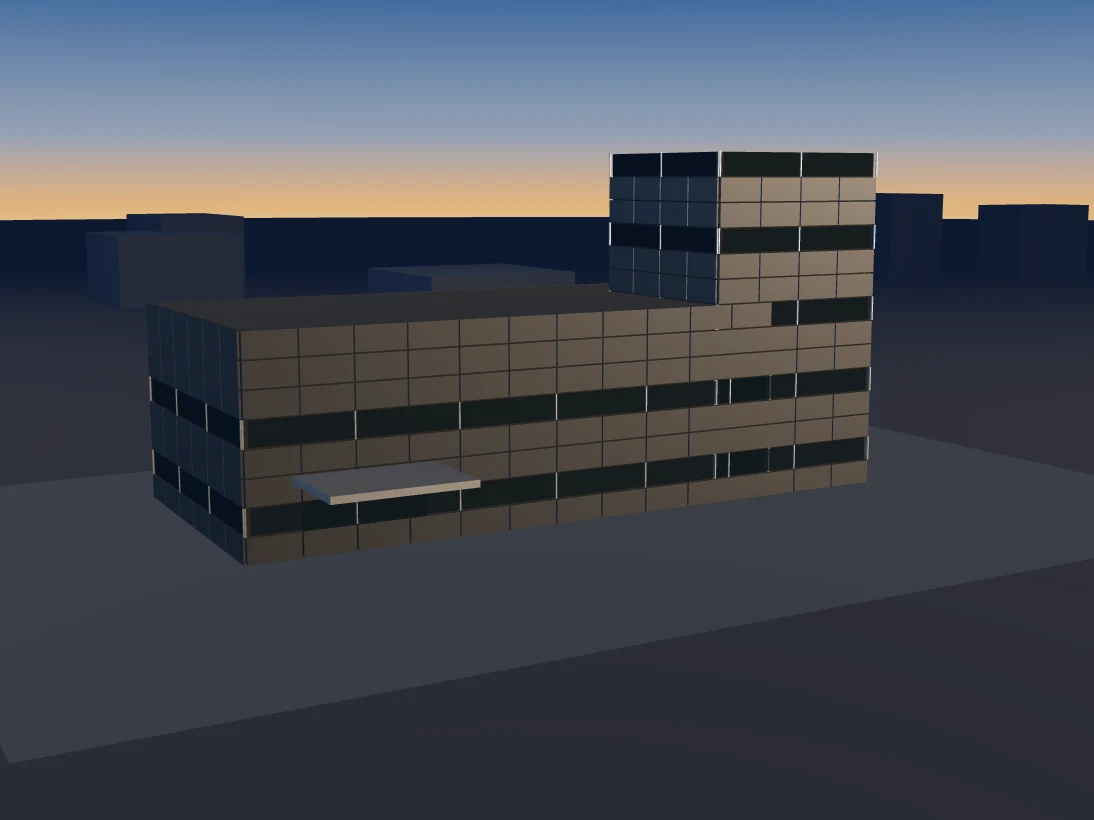
This becomes even more important in sensitive buildings. At Pendik Yüzyıl Hospital, composite panels and glazing were used together. At fuel stations such as Petrol Ofisi İspartakule, white composite panels carry the brand identity. You can find more on our composite panel facades, and where cladding meets glazing, the structural silicone facade details are designed together with the panel joints.
Frequently asked questions
Can you tell FR and A2 panels apart by looking at them?
Generally not. The distinction is made through the product labelling, the classification report and the declaration of performance. If in doubt, an offcut can be inspected or tested.
Is an A2 panel fabricated differently?
Cutting, routing and folding are broadly similar, but because the core is different, the manufacturer’s fabrication guidance should always be followed.
Should existing PE-core panels be replaced?
That decision should be made by a fire specialist based on the building’s height, construction and use. If replacement is needed, the existing substructure and insulation should be assessed at the same time.
We offer a free site survey to help you confirm the right panel class and system details for your composite facade. Contact us to request a survey or quotation.