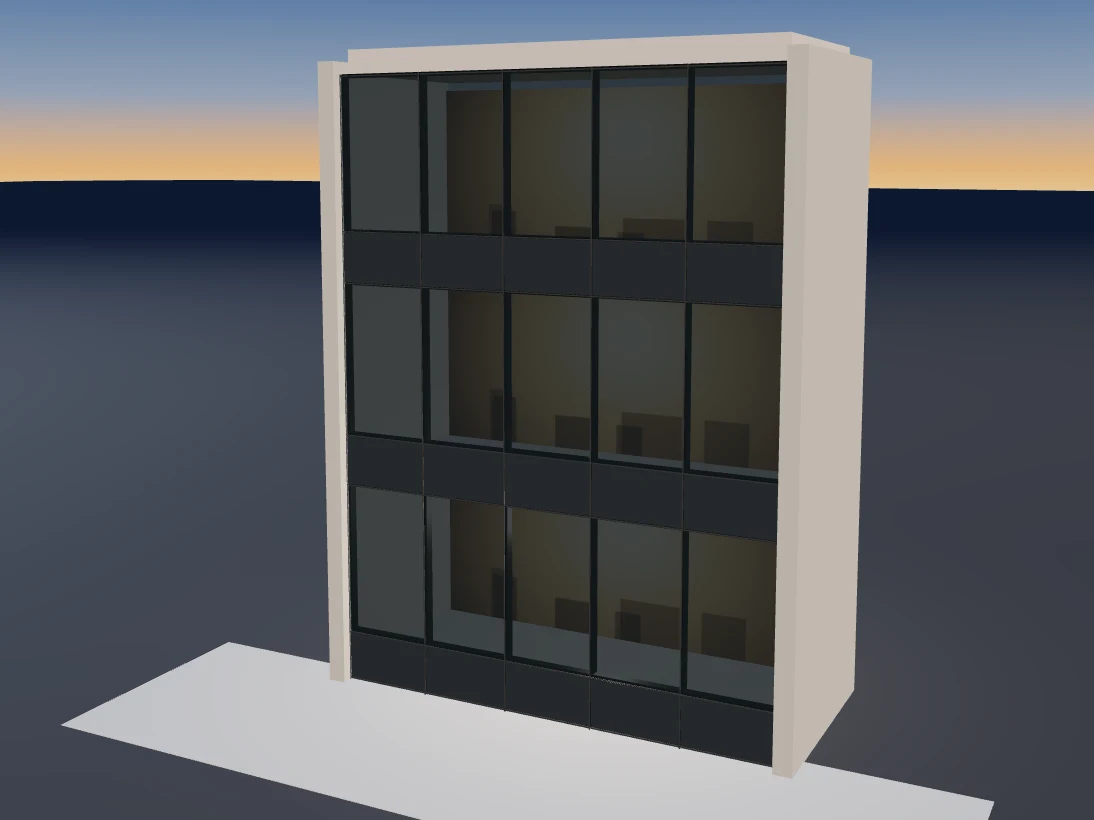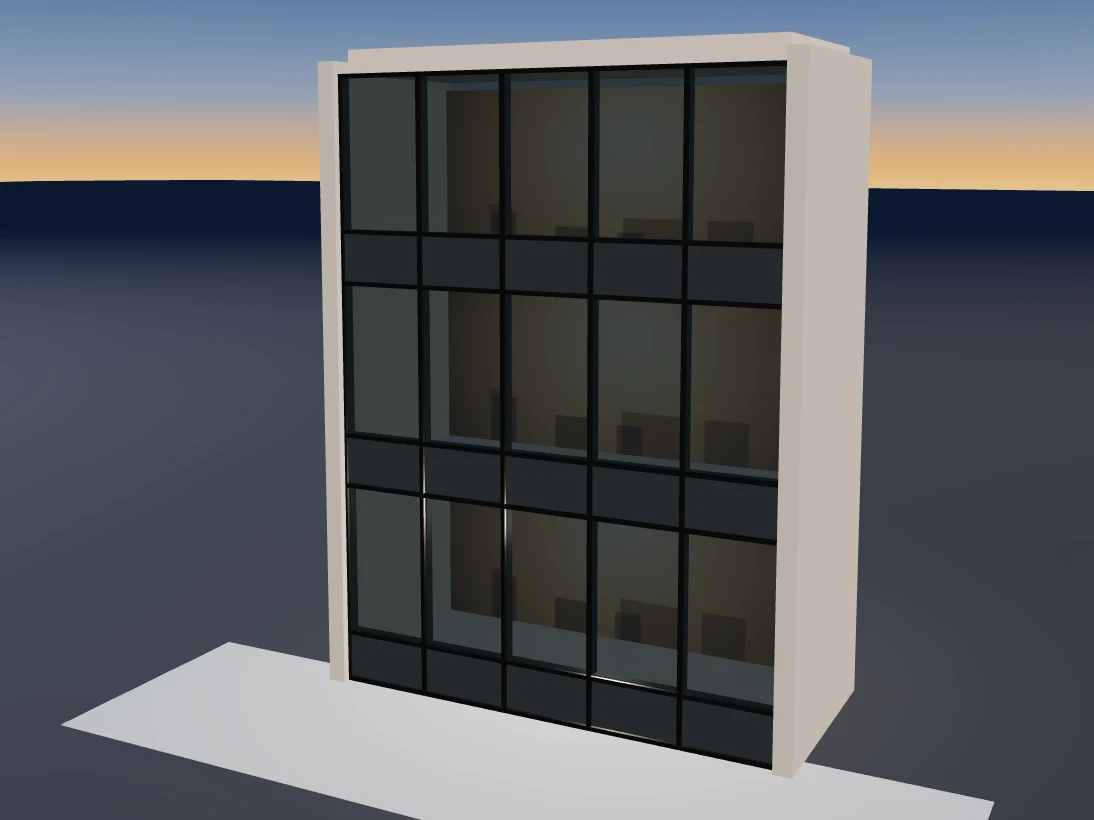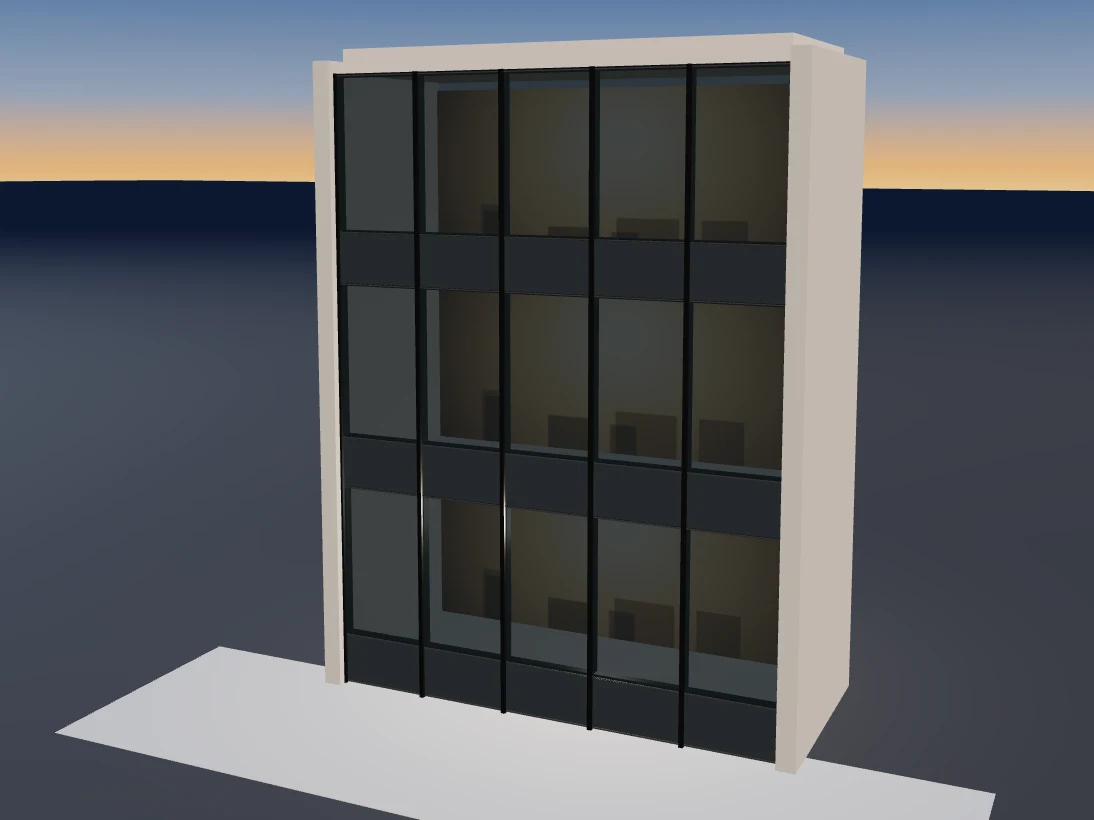
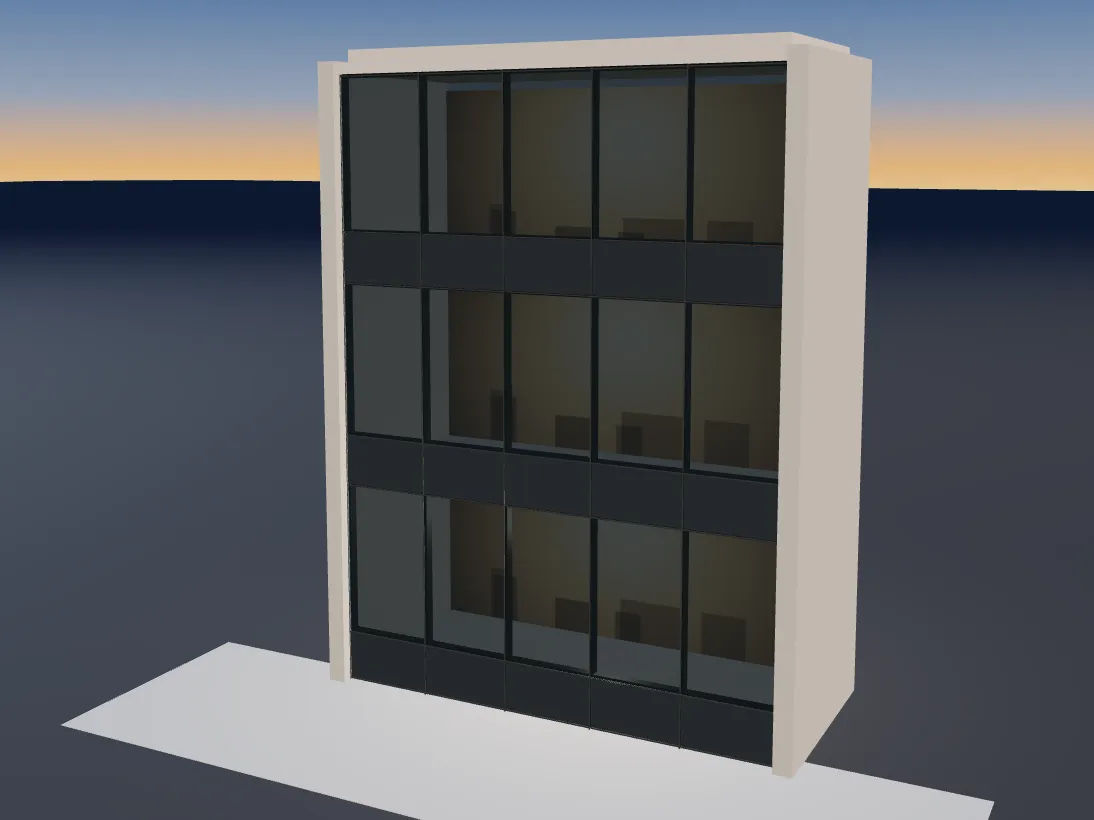
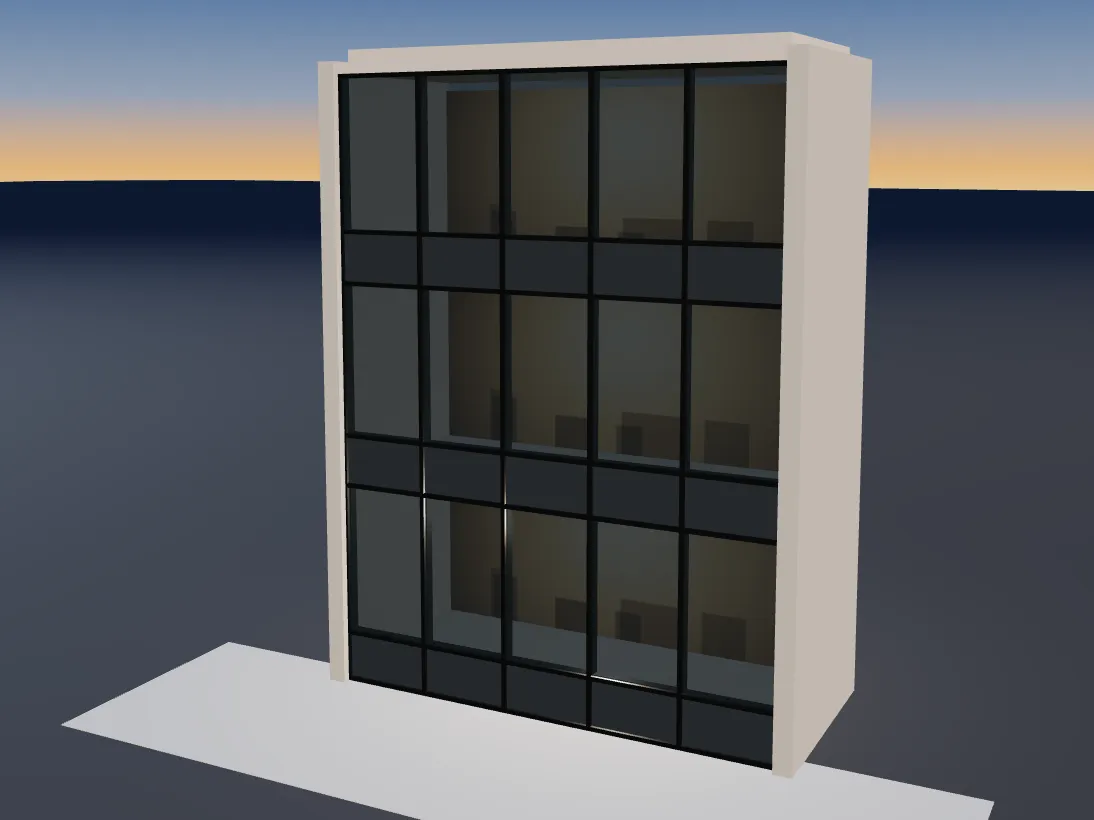
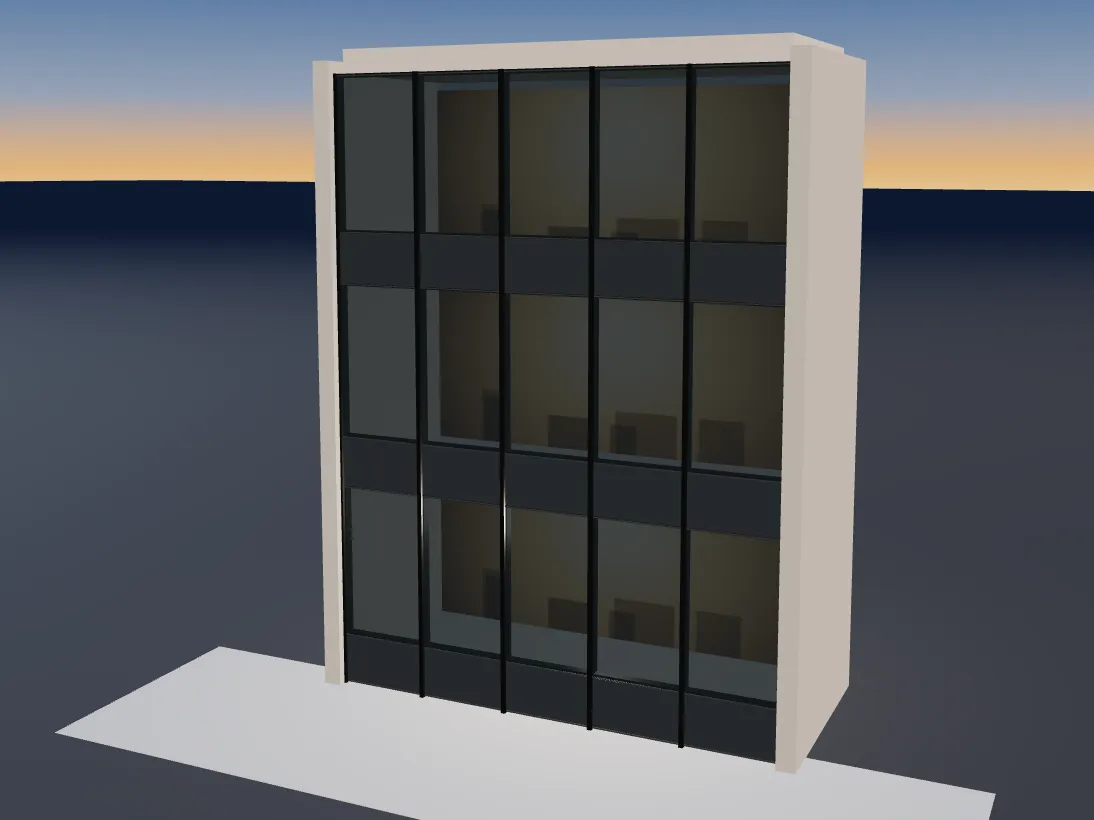
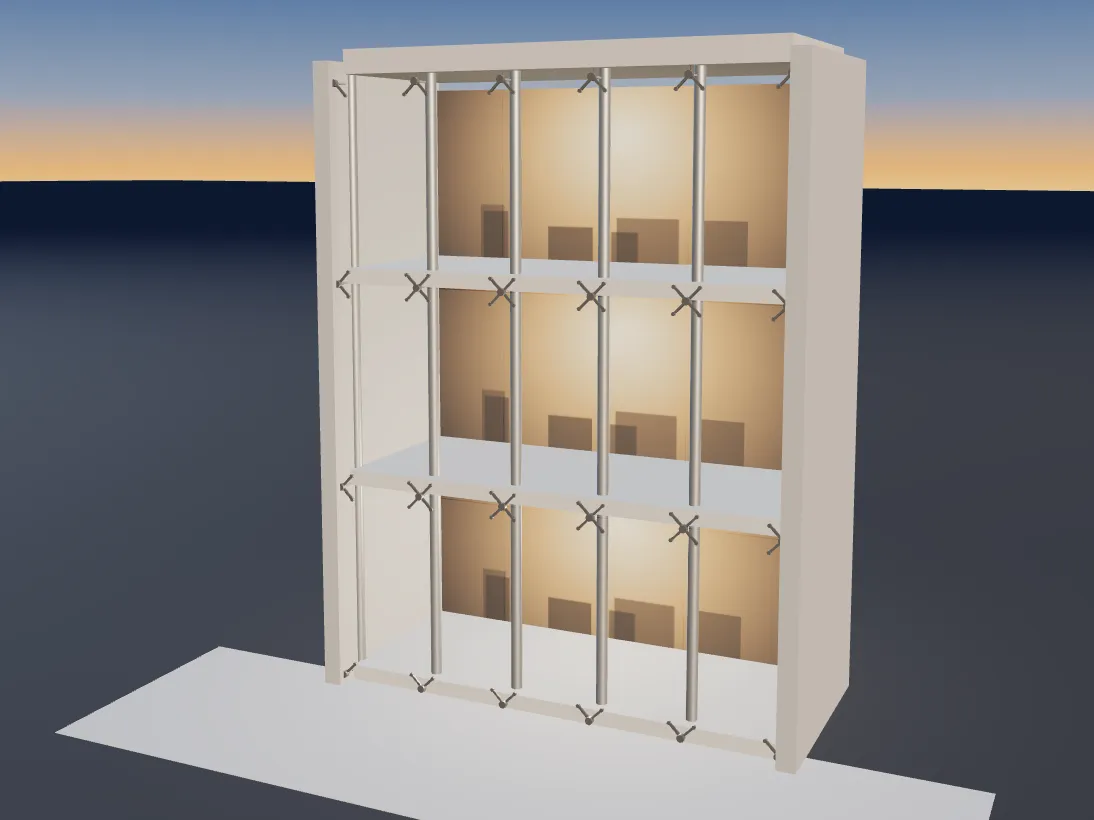
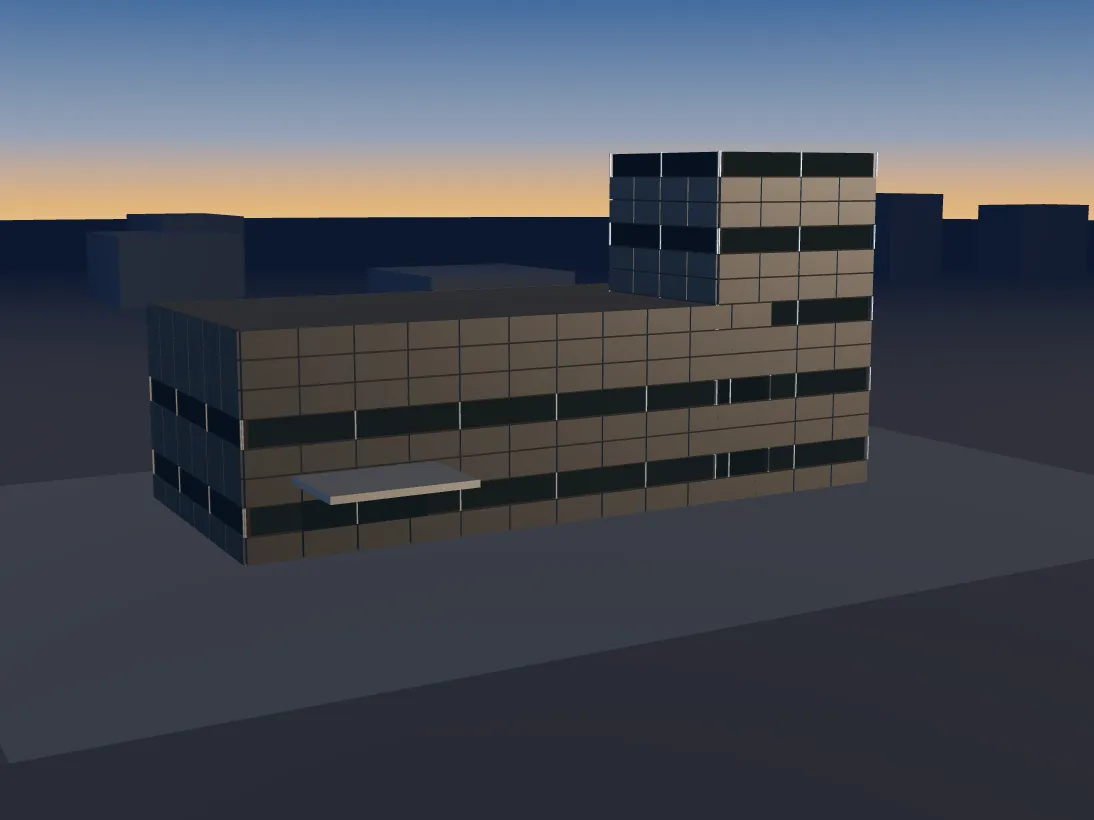
When a client asks us which curtain wall they should choose, the conversation usually comes down to one question: structural silicone or capped? Both systems use an aluminium grid with glass infill. What separates them is how the glass is held to that grid, and that single detail shapes the look of the building, the way it is installed and how easily it can be maintained over its life.
Below we compare the three systems we install most often: structural silicone glazing, capped curtain wall and semi-capped curtain wall.
What a curtain wall actually does
A curtain wall is an external envelope hung from the building’s structure on brackets. It carries its own weight and the wind load acting on it, but none of the building’s floor loads. Vertical mullions and horizontal transoms form a grid, and the glass or panels sit within it. The systems differ in how that infill is fixed.
Structural silicone glazing
In a structural silicone facade, the glass is bonded to an aluminium sub-frame with structural silicone. The sub-frame is then fixed to the main grid. From outside, no aluminium is visible: you see a continuous glass surface separated by narrow joints filled with weatherseal silicone.
What it offers
- A flush, uninterrupted glass appearance.
- Bonding usually done in the workshop, under controlled conditions, rather than on site.
- Where double glazing is used, the secondary seal of the insulating glass unit must also be UV-resistant silicone.
- Compatibility between the silicone, glass, aluminium finish and gaskets should be tested and confirmed by the sealant manufacturer.
What to watch
Structural bonding depends on clean surfaces, correct curing time and documented quality control. It is not a job to improvise on site. On taller buildings, and under some regulations, a mechanical safety retention device may be required in addition to the bond. This should be settled early with the structural and facade engineers.
Capped curtain wall
In a capped curtain wall, the glass is clamped mechanically to the grid by an external pressure plate, and a decorative cover cap clips over it. The result is visible aluminium lines in both directions.
What it offers
- The glass is held mechanically, with no reliance on a structural bond.
- Installation is carried out on site from the outside, with no curing time to wait for.
- The colour and depth of the caps give the facade a clear linear character.
- Replacing a broken pane is relatively straightforward: remove the cap and pressure plate, swap the glass, refit.
Capped systems are a common choice where the aluminium grid is part of the architectural expression, or where ease of installation and maintenance is the priority.
Semi-capped curtain wall
A semi-capped curtain wall sits between the two. The glass is capped in one direction, either vertical or horizontal, and silicone-jointed in the other. Only one set of lines is visible.
Horizontal caps tend to make a building read as lower and wider, emphasising the floor levels; vertical caps make it look taller and slimmer. Architects often use semi-capped glazing to get exactly the rhythm they want without the full grid.
Which one is right for your project?
There is no single correct answer. These are the questions we work through with clients:
- Appearance: Do you want a glass mass or a defined grid? Flush glass points to structural silicone; a rhythmic facade points to capped or semi-capped.
- Height and wind load: As buildings get taller, pane sizes, profile depths and safety details become more critical.
- Fabrication and programme: Structural silicone needs workshop production and a planned sequence. Capped systems are more flexible on site.
- Maintenance: Glass replacement is generally simpler with capped systems.
- Interfaces: Junctions with composite panels, opening vents and entrance doors all influence the choice.
In practice, many buildings combine systems. At Anatolia Sign’s head office, the curtain wall works alongside white composite panels; at Efatur’s head office, vertical fins added to the glazing define the facade. On large glazed buildings such as Beylikdüzü Birinci Hospital, the system choice is weighed against the construction programme as much as the appearance.
Frequently asked questions
Is structural silicone glazing less durable than a capped system?
No. A properly designed structural silicone facade, using materials tested for compatibility and applied under controlled conditions, has a long service life. The difference lies in how the glass is retained, not in durability.
Should the caps on a semi-capped facade run vertically or horizontally?
That is an architectural decision. Horizontal caps emphasise the floors; vertical caps emphasise height. Both are technically achievable.
Can we change the system when refurbishing an existing building?
Often, yes, but the existing brackets, slab edges and structure need to be surveyed first. On refurbishment projects, a site survey is always the starting point.
If you are not sure which curtain wall system suits your building, our team can visit the site for a free survey and give you a clear, practical recommendation. Get in touch to request a survey or quotation.